
About the morphology scan
The morphology, or 20-22 week scan, is performed to assess the structure and development of the baby, the position of the placenta, the growth of the baby, the amount of amniotic fluid surrounding the baby and maternal structures such as the cervix and ovaries.
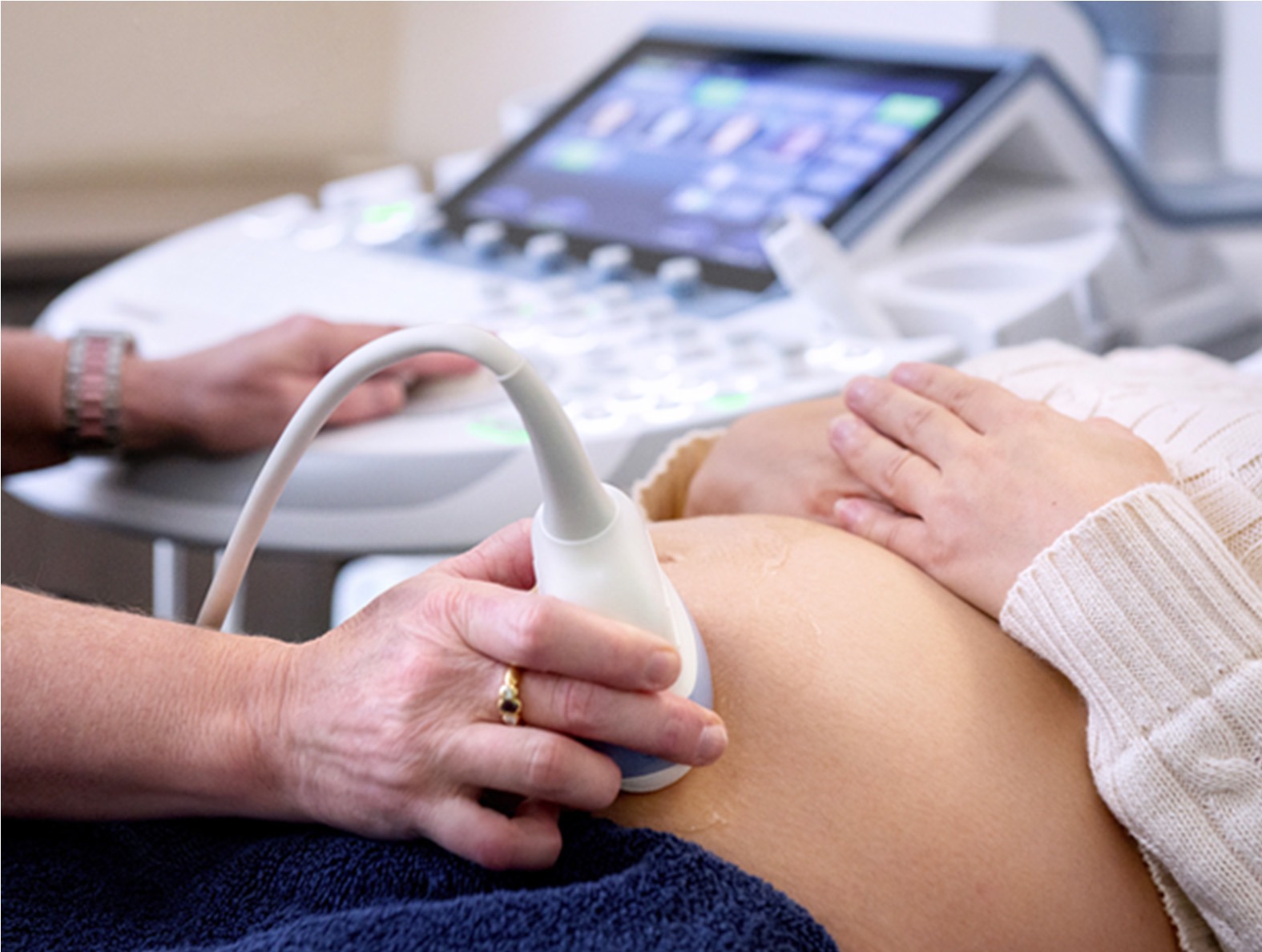
The examination is performed by one of our highly trained obstetric sonographers using state-of -the-art ultrasound equipment. The scan includes a detailed examination of the developmental anatomy of the baby which includes the heart, kidneys, brain, face, stomach, lungs, spine, abdomen, genitalia, arms, legs, hands and feet.
Measurements of the head, abdomen, arms and legs are taken to review and estimate gestational age. At this stage the baby is now too big to measure the entire length from head to toe. The amniotic fluid, your cervix and the placenta location will also be assessed.
Even with such a detailed examination, not all abnormalities will be detectable on an ultrasound scan despite adequate views. Chromosomal abnormalities such as Trisomy 21 (Down syndrome) cannot be diagnosed on ultrasound, but occasionally we pick up clues which may increase the suspicion that there is a chromosomal problem.
We will attempt to discover the sex of the baby if you wish, but it is important to know that this is not always accurate on ultrasound alone. If you do not wish to know the gender, please let your sonographer know at the start of the ultrasound examination.
A note to parents coming in for this scan
We know that for many parents, the morphology scan is one of the most anticipated and, quietly, one of the most nerve-wracking appointments of a pregnancy. You may have been looking forward to seeing your baby in detail. You may also be carrying some anxiety about what the scan might find. Both of those things are completely normal, and often exist at the same time.
Our team performs this examination every day, and we do not take lightly the fact that for you, this is not routine. We work carefully and thoroughly, and we make time to explain what we are seeing as we go. If you have concerns going into the scan, whether about a previous result, a family history, or simply a feeling you cannot quite name, please tell your sonographer at the start of the appointment. That context helps us, and it means you are less likely to leave with unanswered questions.
Whatever the outcome of your scan, you will not leave our rooms without a clear explanation of the findings and, where needed, a clear path forward. That is the standard we hold ourselves to, because we understand what is at stake for you. If you do have questions for our clinical team, please ensure that you highlight these at the time of your examination.
What we are looking for, and why it matters
The morphology scan examines your baby system by system. Here is what each part of the assessment involves and why it is clinically important at this stage of pregnancy.
The heart
The fetal heart is one of the most detailed and time-intensive parts of the morphology scan. By 20 weeks, the four chambers of the heart are visible, as are the major vessels leading in and out of it. We assess the structure, position, and symmetry of the heart, looking for any features that may indicate a congenital heart condition. Congenital heart defects are among the most common structural abnormalities detected on ultrasound, and identifying them before birth allows your care team to plan accordingly. It is important to note that certain heart abnormalities may not be detected on ultrasound antenatally.
The brain
We assess the structure of the fetal brain including the ventricles, cerebellum, and the fluid spaces surrounding the brain. Abnormalities in brain structure can be associated with a range of conditions, some of which are manageable with early intervention and specialist support. The brain continues to develop significantly after birth, so findings at 20 weeks are always interpreted in that context.
The spine
The spine is examined along its full length to assess the vertebrae and the overlying skin. This assessment looks for conditions such as spina bifida, where the spinal column does not close completely during early development. The position and movement of the baby can affect how clearly the spine is visualised, which is one reason some scans require additional time or a follow-up appointment.
The face
Facial assessment includes the profile, the lips, the nose, and the eye sockets. We look for features associated with cleft lip and palate, which is one of the more commonly detected facial differences on ultrasound. Not all facial differences are detectable on imaging, but the morphology scan provides a meaningful opportunity to assess the major structures.
The kidneys and bladder
Both kidneys are assessed for their size, position, and appearance, and the bladder is checked to confirm it is filling and emptying normally. The kidneys play an important role in producing amniotic fluid, so their function has implications beyond the organs themselves. Some kidney findings detected at 20 weeks resolve on their own before birth and require no further intervention.
The stomach and abdominal wall
A visible, fluid-filled stomach is a reassuring sign that the baby is swallowing normally. The abdominal wall is also assessed to check that the internal organs are properly contained. Conditions affecting the abdominal wall, while uncommon, are among the findings that benefit significantly from detection before birth, as they allow delivery planning and early specialist involvement.
The lungs
While lung function cannot be assessed directly on ultrasound, their appearance and position within the chest can be evaluated. We look at the size and symmetry of the lungs and check that surrounding structures such as the heart and diaphragm are in the correct position.
The limbs, hands, and feet
All four limbs are assessed for their structure and proportions. The femur and humerus are measured as part of the fetal biometry assessment of the baby. The presence of hands and feet is confirmed, and we look at the long bones of the arms and legs for any features that may indicate a skeletal condition. Finger and toe counts are attempted where the baby’s position allows, though this is not always achievable.
Growth measurements
Measurements of the Biparietal Diameter (distance from one side of the head to the other side of the head), head circumference, abdominal circumference, and the length of the femur (thigh bone) and humerus (upper arm bone) are taken and plotted against established growth charts. These measurements give an estimate of the baby’s size and allow us to assess whether growth is tracking as expected for gestational age.
The placenta, cervix, and amniotic fluid
The position of the placenta is carefully documented, particularly in relation to the cervix. A low-lying placenta at 20 weeks does not necessarily indicate a problem, as the placenta often moves upward as the uterus grows, but it is something that will be monitored in subsequent scans. The amount of amniotic fluid is also assessed, as too much or too little can be an indicator of underlying conditions affecting the baby or the placenta.
The cervix is assessed to ensure that there are no fetal blood vessels within the vicinity or ‘crossing’ the placenta (condition known as Vasa Praevia) and the length measured. It is recommended if a transabdominal measurement of the cervix is less than 35mm, that a vaginal assessment should be performed. A cervix is considered to be shortened if it measures 25mm or less between 16-24 weeks. Further follow up scans may be required if there is clinical concern regarding the length of the cervix or if early suspicion or detection of vasa praevia is noted (Preterm Alliance, n.d.; RANZCOG, n.d.).
Common questions we hear about the morphology scan
Will the morphology scan detect everything?
The morphology scan is a detailed and thorough examination, but it is not possible to detect every abnormality on ultrasound. Some conditions are not visible on imaging, and others may only become apparent later in pregnancy or after birth. What the scan does very well is assess the major structural systems of your baby at a stage when they are developed enough to be meaningfully evaluated. Our team will always be clear with you about what has been assessed and what the findings mean.
What if my baby is not in a good position?
This is one of the most common reasons a scan takes longer than expected, or why a follow-up appointment may be needed. Babies move throughout the examination, and our sonographers are experienced in working patiently to obtain the views required. If adequate images cannot be obtained on the day, we will rebook you rather than give you an incomplete picture. This is routine and does not indicate that anything is wrong.
What does it mean if I am asked to come back?
Being asked to return for a follow-up scan is more common than most patients realise, and in the majority of cases it is simply because a particular view could not be obtained rather than because a problem was found. Your sonographer will explain the reason clearly before you leave. If there is a clinical reason for the follow-up, that will also be explained to you directly.
What if something is found?
If a finding requires further assessment, our specialist doctors review every scan before results are finalised. In some cases the doctor will scan you directly during your appointment to gather more information. You will not leave without understanding what was seen and what the next step is. QUFW has direct pathways to specialist referral when needed, and our team will guide you through that process.
Is it normal to feel anxious about this scan?
Yes, completely. The morphology scan carries weight for many parents precisely because it feels like a significant checkpoint. Our team understands this, and we do not rush through appointments. If you have specific concerns going in, please let your sonographer know at the start of your appointment.
If something is found: understanding the pathway
Receiving unexpected news during a scan is something no parent anticipates, but it helps to understand in advance how findings are handled at QUFW.
Every morphology scan at QUFW is reviewed by one of our consultant specialist doctors after the sonographer has completed the examination. This dual-review process means that what you receive is not a single opinion, but a considered assessment by a highly trained team.
Findings vary significantly in their nature and implications. Some are minor variations that require no further action. Others may be what are called ‘soft markers’, which are features that can occasionally be associated with chromosomal conditions but are more often seen in perfectly healthy babies. Others still may warrant referral for additional testing or specialist input.
The important thing to understand is that a finding at the morphology scan is the beginning of a conversation, not a conclusion. Your results will be explained to you clearly, in plain language, before you leave. If further steps are needed, our team will outline what those are and why, and where appropriate will facilitate direct referral to the right specialist.
If you have had NIPT testing, those results will also be considered alongside your morphology findings to give the most complete picture possible.
What makes a thorough morphology scan
Not all morphology scans are the same. The quality of the examination depends on the experience of the sonographer, the capability of the equipment, and the process by which results are reviewed and reported.
At QUFW, morphology scans are performed by highly trained obstetric sonographers using state of the art ultrasound equipment specifically configured for obstetric imaging. The examination follows a structured protocol that works through every major system methodically, including the fetal heart, brain, spine, kidneys, face, abdomen, limbs, and placenta.
What distinguishes the QUFW approach is the specialist review that follows every scan. After your sonographer completes the examination, your images are assessed by one of our consultant specialist doctors before your report is finalised. If the doctor needs to scan you directly to clarify a finding or provide additional reassurance, they will do so during your appointment.
This means the report sent to your referring doctor reflects both sonographer expertise and specialist oversight, giving your care team the most complete and reliable information available. For a scan that carries as much significance as the morphology, that level of review is not a luxury. It is what thorough care looks like.
Transvaginal scanning
Occasionally, a transvaginal scan is required to get the images needed to complete the examination, especially to assess the cervix and lower placental edge. The sonographer will discuss this with you if it is deemed necessary in your case. Transvaginal ultrasounds are performed with discretion at QUFW and are considered safe during pregnancy.
3D/4D scanning
The majority of the scan is completed in conventional 2D (greyscale) as this offers the best resolution for detecting abnormalities. We will also try to obtain some images in 3D/4D of your baby, but this is very dependent on the baby’s position, the amount of amniotic fluid and maternal issues like placental position and maternal body habitus.
The priority of the ultrasound is to check the baby’s wellbeing and to provide you and your doctor with all the information we can in regards to the baby’s health. In reality, it may be difficult to obtain the ideal 3D/4D image of your baby due to a variety of reasons. Our staff will make every effort to provide you with some keepsake images.
As we are a medical facility, we do not perform ultrasound specifically for entertainment purposes.
Results
After the sonographer has completed the scan, your images will be reviewed by one of our consultant specialist doctors. It may be necessary at times for the doctor to scan you as well if they need to check something or provide you with reassurance or more details regarding your ultrasound. You will receive a copy of the report and a copy will also be sent to your referring doctor.
Preparation
It is recommended to empty your bladder 1 hour prior to the procedure and drink 2 glasses of water and then do not empty. You are welcome to bring your family members or a close friend to your scan. Children are welcome but their attention span may be limited for the duration of the ultrasound, so it is helpful if another adult is available to help look after them.
Please bring with you: a referral from your doctor, and previous scans such as dating scans, NIPT results and Combined First Trimester/Nuchal Translucency screening ultrasound or dating scans if performed elsewhere.
Book an appointment
References
Australian Preterm Birth Prevention Alliance. (n.d.). Clinical guidelines. https://pretermalliance.com.au/our-research/clinical-guidelines/#:~:text=The%20Key%20Practice%20Points%20include,continue%20until%2036%20weeks%20gestation
Royal Australian and New Zealand College of Obstetricians and Gynaecologists (RANZCOG). (n.d.). Measurement of cervical length for prediction of preterm birth. https://ranzcog.edu.au/wp-content/uploads/Measurement-Cervical-Length-Preterm-Birth.pdf
Content Disclaimer
The information provided on this website is for educational and informational purposes only. It is not intended as a substitute for professional medical advice, diagnosis, or treatment. Always seek the advice of your obstetric doctor or other qualified provider with any questions you may have regarding a medical condition or treatment and before undertaking a new healthcare regimen.
The content on this website is not intended to be a comprehensive source of information on any particular topic and should not be relied upon as such. The authors and publishers of this website are not liable for any damages or injury resulting from the use or misuse of the information provided on this website.

Morphology assessment of the fetal brain
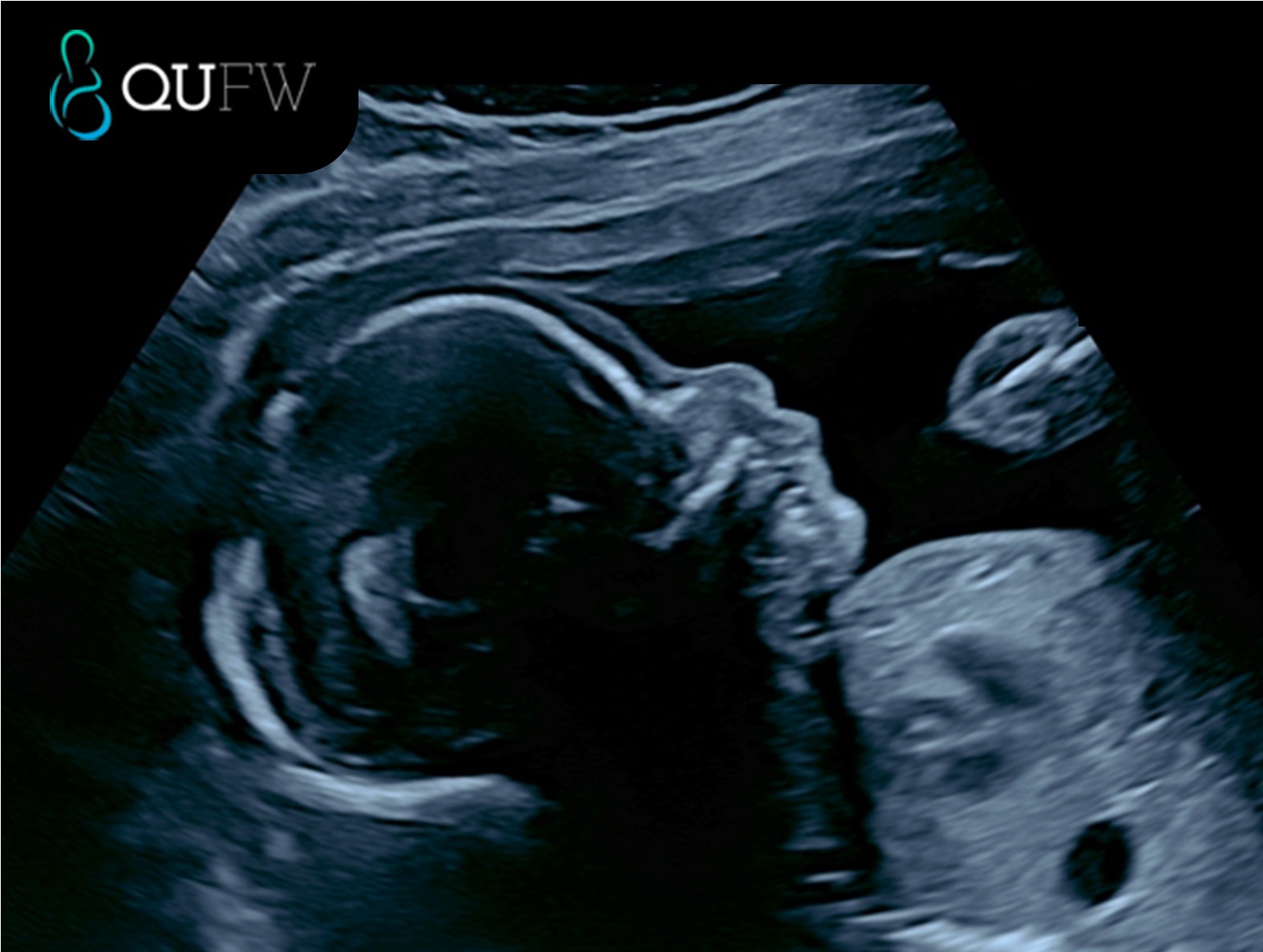
Morphology assessment of the fetal profile
Fetal heart assessment
about QUFW
QUFW provides a comprehensive range of obstetrics services for singleton and multiple pregnancies, including screening, tertiary opinion and invasive testing. In addition, our gynaecology ultrasound examinations are equally expansive from routine to gynaecology procedures.
Beyond your scan, we believe in comprehensive care. Our team takes the time to discuss findings with you, answering your questions, addressing your concerns, and providing you with support and guidance. We value the trust placed in us and are committed to delivering ultrasound and other women’s health services to our community and beyond. We are QUFW. We are here for you.
FREQUENTLY ASKED QUESTIONS
What are your opening hours?
Our Brisbane practice is open Monday – Friday 8am to 5pm, Saturday 8am-12:30pm.
Our Ipswich, Southport and Tugun practices are open between Monday – Friday 8am to 5pm.
Where can I park my car?
Spring Hill: Metered street parking on Little Edward and Boundary Streets (Please be aware of the clearway zone at certain times of the day).
Parking underneath the Leichhardt Court building (orange section) with entry via Hope Street. Online bookings are recommended through Wilson parking.
Southport: 4 hour metered parking is available on Short Street. Additional car parking available in the Gold Coast City Council Carey Carpark and Australia Fair Shopping Centre
Ipswich: Onsite Parking is available at the back of the Medical Centre. Metered on street Ipswich City council parking is also available.
Tugun: Onsite car parking is available in the John Flynn Hospital campus.
How much will my scan cost?
The cost of the ultrasound and consultation will be discussed at the time of making an appointment. We request that accounts be settled on the day after the consultation. We have EFTPOS and accept MasterCard, VISA and American Express. We are a private medical ultrasound service and we do not routinely bulk bill as this would not allow us to provide the best comprehensive service for our patients.
How long will the appointment take?
Our scans can range from approximately 30-60 minutes depending on the type of scan, but please allow up to 90 minutes. Occasionally there are unexpected delays. If a problem is detected in a routine ultrasound, it will be discussed with you at the time of your appointment. In this situation, further examination and reassessment may extend over a longer period depending on the complexity of this problem and individual patient needs. This process may lead to delay of the assessment of other women’s appointments.
We apologise for these delays which are unpredictable and we make every effort to avoid significant patient inconvenience. We ask that you demonstrate kindness to our staff if there is an unforeseen delay. We recommend that you ring our rooms in advance to check that we are not significantly delayed so you can plan your day and parking arrangements.
Can I bring another person to my appointment?
At QUFW, we allow two support people to attend your appointment. One of these support people may be a child. Sometimes pregnancy ultrasounds can be a long time for your little one’s attention span, so we request that the other support person is a supervising adult who may be able to attend to your child during the scan if necessary. If you are a surrogate patient, we are happy to discuss this with you when you make your appointment.
Latest News & Feature Articles

Vasa Praevia: When to Look Closer
Vasa praevia is a near-perfect example of a condition where ultrasound can genuinely change a...

Cervical Insufficiency in Pregnancy: What It Is, How It’s Found, and What It Means
If you have been told you have cervical insufficiency, it is natural to want to understand what it...
Do you have any questions?
BRISBANE
Suite 11E, Level 1
Leichhardt Court
55 Little Edward Street
Spring Hill, QLD 4000
07 3831 1777
07 3831 1788
brisbane@qufw.com.au
TUGUN
Suite 8B, Level 8
Fred McKay House
42 Inland Drive
Tugun QLD 4224
07 5610 4973
07 5604 1192
tugun@qufw.com.au
IPSWICH
Suite 5B,
10 Churchill Street,
Ipswich, QLD 4305
07 3447 9111
07 3492 9299
ipswich@qufw.com.au
TOOWOOMBA
Medici Medical Centre
201A/15 Scott St,
East Toowoomba, QLD 4350
07 4542 7855
07 4602 0145
toowoomba@qufw.com.au